Seneca Falls
✳︎
Labor Force
✳︎
Feminism
✳︎
MeToo
✳︎
Seneca Falls ✳︎ Labor Force ✳︎ Feminism ✳︎ MeToo ✳︎
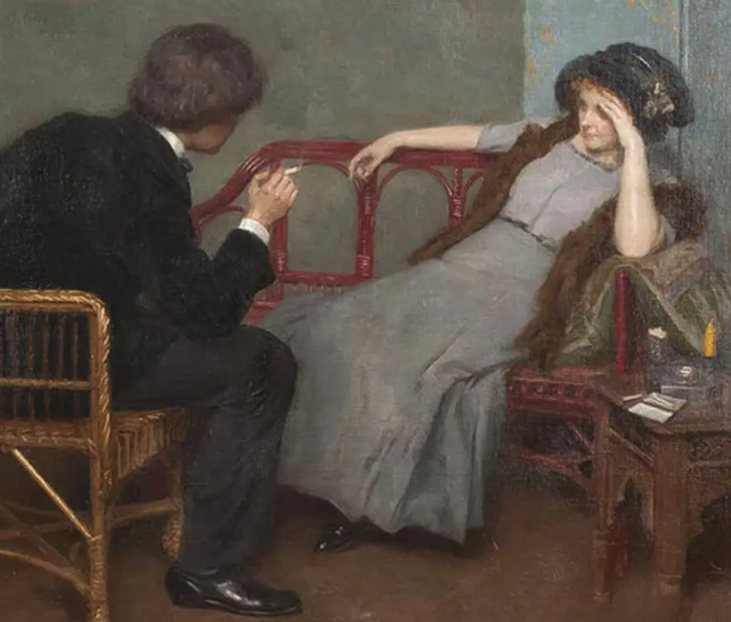
1874
Berthold Woltze
Der lästige Kavalier →
Der lästige Kavalier, or The Irritating Gentleman, was created by Berthold Woltze in 1874. It depicts a woman in mourning while a man encroaches on her space showing his lack of respect.
First Wave
1848 Seneca Falls Convention
Native American, Black, and Mexican American women advocated for authority over their own lives (1820s-1850s)
Sojourner Truth “Ain’t I Woman”
Challenged historical accounts of feminist activism
Combahee River Collective
Increased male participation
Third Wave
Revival of feminine aesthetics
Second Wave
Rejection of beauty ideals
Bra Burning Feminist
The Seneca Falls convention in 1848 is generally thought of to be the beginning of the first wave of feminism. At the convention, 200 women and 40 men gathered to create a list of priorities for advancing women’s rights. However, Native American/American Indian, Black, and Mexican American women advocated for authority over their lives beginning in the 1820’s. A women’s right to vote was a main priority and would happen 100 years later in 1920. The second wave is said to have begun in the 1960’s. This era is often critiqued as it placed a main focus on the struggles of white, middle-class women. Therefore, the Combahee River Collective, a group of Black feminist lesbian activists, defined a feminism that prioritized the lives of women of color. During this time many women rejected beauty ideals such as high heels and makeup. The mid-1990’s marked the beginning of the third wave. Feminists aimed to reject the notion that being a woman is a shared experience. The lives of every woman looks different, signifying that protests are not one size fits all.
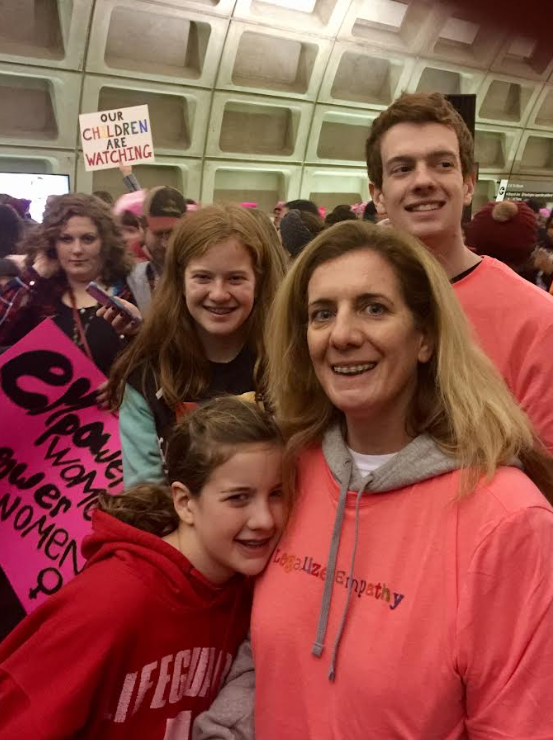
Feminism is prevalent in my world as I grew up in a family that prioritized it. At 10 I attended the Women’s March with them. We designed t-shirts and marched in DC on January 21 2017. I didn’t fully grasp the concept then but I continue to see why I was exposed at a young age. My family never knowingly placed stereotypes on us, but it did happen. It may have been that my brothers were eight and six years older then me, but they were always tasked with mowing the lawn. The first time I completed the chore I was 12 and my brother had just moved away for college. Despite those unconscious decisions, I was always positively reinforced to try anything and outdo my siblings in everything. I’m the youngest of 4 and that made me determined to outperform my siblings in any way I could. Sure I could do flips, but I wanted to sling a football further than my brothers. A core memory of mine was when I was finally able to throw a football over our roof, just like my big brother. Since I’ve grown up, I’ve become more aware of the threat on feminism in our current world.


Are We in a Fourth Wave?
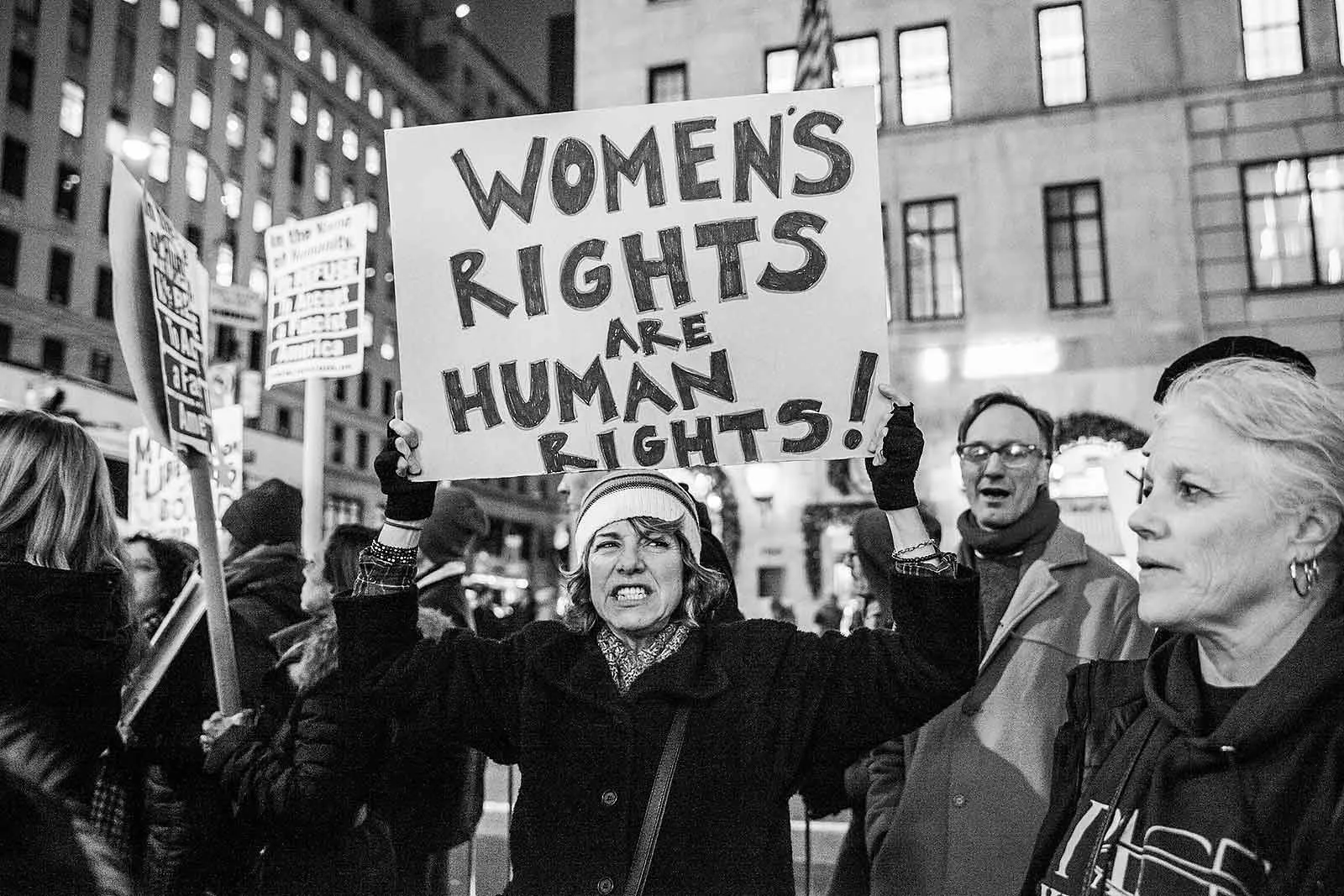
The Women’s March